What Construction Play Really Does
Construction play is more than just a fun activity for children it’s a powerful tool for cognitive development. Through hands on building, kids explore ideas, test boundaries, and build essential problem solving skills.
What Counts as Construction Play?
Children engage in construction play when they use materials to build, stack, connect, or create physical structures. Common tools include:
Wooden or plastic blocks
LEGO bricks or other interlocking pieces
Magnetic tiles (e.g., Magna Tiles, Picasso Tiles)
Foam or cardboard building sets
Natural elements like sticks, stones, or sand
This type of play is often open ended, meaning there’s no single correct outcome just creativity and exploration.
How Open Ended Play Encourages Innovative Thinking
Unlike structured tasks, open ended play gives children the freedom to experiment without fear of failure. This freedom encourages:
Creative risk taking: Kids try new configurations or designs without needing permission
Independent decision making: They choose materials, test approaches, and adapt as needed
Imaginative thinking: Building a tower might become designing a castle or creating a spaceport
By removing rigid rules, construction play allows children to develop mental flexibility and confidence in their ability to solve problems their own way.
Building as Brain Training
The simple act of stacking blocks is, in fact, a powerful mental workout. When children build, they:
Practice fine motor skills and hand eye coordination
Experiment with balance, symmetry, and gravity
Engage spatial reasoning and logical thinking
These physical interactions with materials help build neural pathways in the developing brain supporting later skills in math, science, and engineering. Construction play is more than activity; it’s cognitive exercise disguised as fun.
How It Strengthens Problem Solving Skills
Construction play is problem solving in real time. Kids don’t start with a blueprint they start with curiosity. A tower falls, they try again. A roof doesn’t balance, they rebuild. It’s slow, often chaotic, and exactly how thinking muscles grow.
This kind of play is all about step by step discovery. Children test one idea at a time, adjusting piece by piece. Each block they place is a choice, each collapse is a clue. They’re learning not just to build, but to decode cause and effect.
Along the way, something deeper kicks in: spatial reasoning. Kids begin to notice patterns which blocks stack best, how symmetry stabilizes, how shapes work together. That intuitive sense of space and form? Critical across science, tech, and real world planning.
It’s also about trying, failing, and trying again. When something doesn’t work, they don’t get a solution handed to them they experiment. Failures aren’t dead ends; they’re part of the learning loop. This builds resilience. Kids figure out that solutions often come after five or fifteen or fifty misfires. And with every revision, their confidence grows.
More than just playing with bricks, they’re building flexible, confident problem solvers.
The Science Behind the Stacking

Give a child a set of blocks, and you’re not just handing them a toy you’re setting off a cognitive chain reaction. Hands on manipulation of objects activates key areas of the brain that are involved in planning, attention, and reasoning. When kids build, stack, connect, and rebuild, they’re engaging their frontal lobes and parietal cortex regions tied to executive functioning and spatial awareness.
Construction play naturally leans into the basics of math and engineering. Each attempt at stacking or balancing introduces concepts like symmetry, weight distribution, and cause and effect. Without worksheets or lectures, children are laying the groundwork for understanding quantity, sequencing, and logic.
And the beauty? It’s self directed. Nobody tells a child how many times they can try again. That freedom builds executive functioning skills: goal setting, flexible thinking, and impulse control. They’re not following instructions they’re making decisions in real time, building mental muscle in the process.
It’s not about building the tallest tower. It’s about wiring the brain for big thinking, one block at a time.
Supporting the Learning at Home or School
If you want kids to problem solve, you’ve got to give them the space and tools to do it. That starts with a play rich environment stocked with open ended materials think wooden blocks, loose parts, cardboard, magnetic tiles. Nothing flashy. Just raw pieces that can become anything. These materials don’t script the play; they leave the story up to the child.
Instead of telling kids what to build, use guided questions to steer their thinking: “Why did that wall fall?” or “What’s another way to make it taller?” These prompts kickstart reasoning without giving away the answer. They engage logic and creativity at the same time.
Construction play isn’t just solo work, either. When kids build together, they negotiate, share ideas, and troubleshoot socially vital skills in any setting. Problem solving, in this context, becomes a group project. That’s real teamwork, no adult intervention required.
And here’s the kicker: none of this works if every moment is scheduled or interrupted. Kids need long stretches of undisturbed time. That’s when their ideas deepen. Curiosity doesn’t follow a bell. Real learning shows up when they’re left alone to explore, test, and try again on their own terms.
Related Benefits of Structured Puzzle Play
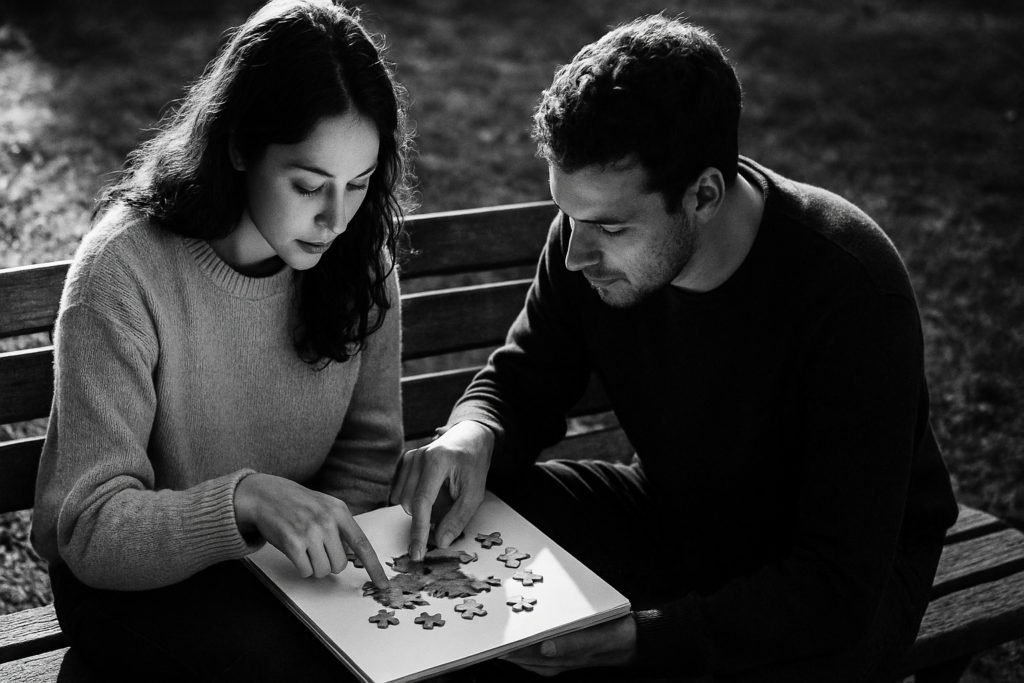
Construction play lays the foundation. Puzzle games take it a step further. When paired together, they create a strong one two punch for cognitive development. While building helps with spatial logic and creativity, solving puzzles brings in focus, memory, and emotional control. Kids learn patience, trial and error thinking, and how to sit with a challenge instead of giving up.
Research backs it up. Children who regularly engage with puzzle based games show stronger skills in problem solving and memory recall. There’s also a growing body of evidence linking early puzzle play to proficiency in STEM subjects later in school particularly math and engineering. Combine that with the hands on discovery of construction activities, and you’ve got a powerhouse model for whole brain learning.
Puzzle games don’t need to be fancy. Think wooden shapes, sorting trays, tangrams, or sliders. The point isn’t speed it’s precision, prediction, and pushing through moments of frustration. That grit, over time, becomes a key part of emotional development too.
Explore more on puzzle game benefits
Big Takeaway for Parents & Educators
Construction play isn’t filler time. It’s brain work disguised as fun. When kids build towers, connect bricks, or figure out how to balance shapes, they’re doing what early engineers do solving problems with their hands and instincts. And when those towers fall or designs flop, they adjust, rebuild, and try again. That’s resilience in action.
The beauty of this type of play is its simplicity. You don’t need a lesson plan. You need space, time, and materials that let imagination lead. Wooden blocks. Interlocking tiles. Magnetic shapes. When a child can take an idea and make it stand up literally they start to think differently about the world around them.
Let them break things. Let them tinker. Give them the chance to fail safely and explore freely. Because that’s where problem solving gets hardwired. With the right setup, every kid every single one can tap into their inner builder and create something new.
Learn how puzzle play boosts mental skills and emotional growth
 is an experienced contributor at Play Briks Construction, where he specializes in exploring the educational potential of construction toys in early childhood development. His work emphasizes the importance of hands-on play in fostering creativity, problem-solving skills, and spatial awareness among children. Patrick is dedicated to providing parents and educators with practical insights and strategies for integrating construction play into learning environments. He also focuses on the latest trends and innovations in the toy industry, ensuring that his audience stays informed and engaged.